
Why Traveling with Kids Feels Harder Than Expected
Traveling with kids often looks easier in theory than it feels in reality. You prepare in advance, think through the route, bring snacks, download a few apps, and expect that everything will go smoothly. But once the trip starts, the situation changes quickly. The child gets restless, loses interest in what you prepared, and the same question appears again and again: “what now?”
This is exactly why many parents search for answers like how to travel with kids without stress, why kids get bored on a plane, or what actually works when traveling with kids.
The challenge is not just keeping a child busy. It is about managing attention in an environment that is already overloaded. If you have noticed your child becoming more reactive during travel, it often connects to a broader pattern of overstimulation from apps, where attention is constantly pulled instead of guided.
What Most Parents Try First and Why It Stops Working
Most parents follow a similar pattern during travel. At the beginning, simple solutions seem enough. Snacks help for a while, toys hold attention briefly, and videos feel like the easiest way to create a quiet moment.
But over time, the effect weakens. The child switches between activities faster, loses interest more quickly, and even videos stop holding attention the way they did at the start. This is when parents begin to notice something unexpected. Even with multiple options available, the child still feels bored.
This is why queries like kids entertainment during travel, why YouTube stops working for kids, or kids get bored even with videos appear so often. The issue is not the lack of options. It is the way those options are structured. Many parents start looking for what to give kids instead of YouTube, especially when they notice that endless content creates more tension than calm.
Why Kids Get Overstimulated During Travel
Travel creates a completely different environment for a child.
There are new sounds, limited movement, unfamiliar spaces, and constant small changes that require attention. Even if everything looks calm from the outside, the child’s nervous system is processing much more than usual.
This is why many parents search for why kids get overwhelmed on flights or try to understand overstimulation during travel with kids. The overload usually comes from three main factors:
New environment, which requires constant adaptation.
Limited control, as the child cannot move or change the situation freely.
Continuous stimulation, coming from both the environment and digital content.
When these factors combine, attention becomes unstable. Instead of focusing, the child begins to react to everything at once. This is the same pattern parents often notice at home, which is why topics like calm apps for kids and reducing stimulation become important beyond just travel.
What Actually Helps Kids Stay Calm and Engaged
When parents try to fix the situation, they often focus on adding more options.In reality, the solution works in the opposite direction. Children do not need more content during travel. They need more structure.
A structured experience changes how attention works. Instead of reacting to constant input, the child begins to follow a sequence. This reduces internal tension and makes the experience easier to manage. That is why parents searching for how to keep kids calm during travel or apps that help kids focus on a plane often find that slower, more predictable formats work better.
The key principles are simple:
Structure over content
Calm over stimulation
Step-by-step interaction
These are the same principles behind games that help kids focus, where attention is guided instead of fragmented.
Simple Travel Hacks That Make a Real Difference
Once the focus shifts from content to structure, practical solutions become much easier to apply.
There are several travel hacks that consistently work because they align with how children process attention during long trips.
Break time into small segments. Long periods feel overwhelming, but short, clear intervals are easier to manage and complete.
Rotate activities, not content. Switching between different types of interaction works better than endless scrolling or passive watching.
Use structured apps instead of passive videos. Activities with a sequence hold attention longer because they provide direction.
Plan offline activities in advance. This removes dependency on internet connection and avoids sudden interruptions.
Keep one stable anchor activity. A familiar, repeatable experience helps the child feel more secure in a changing environment.
These are the kinds of kids travel hacks parents rely on when searching for how to keep kids busy on a road trip or what works on long flights with kids.
Why Offline Apps Matter More Than You Think
During travel, internet access is often unstable or completely unavailable. This creates a hidden problem. When content stops loading or an app depends on connection, the experience breaks. For a child, this interruption often leads to frustration. This is why many parents look for offline apps for kids or search for apps for kids without internet on a plane. Offline interaction solves more than just a technical issue.
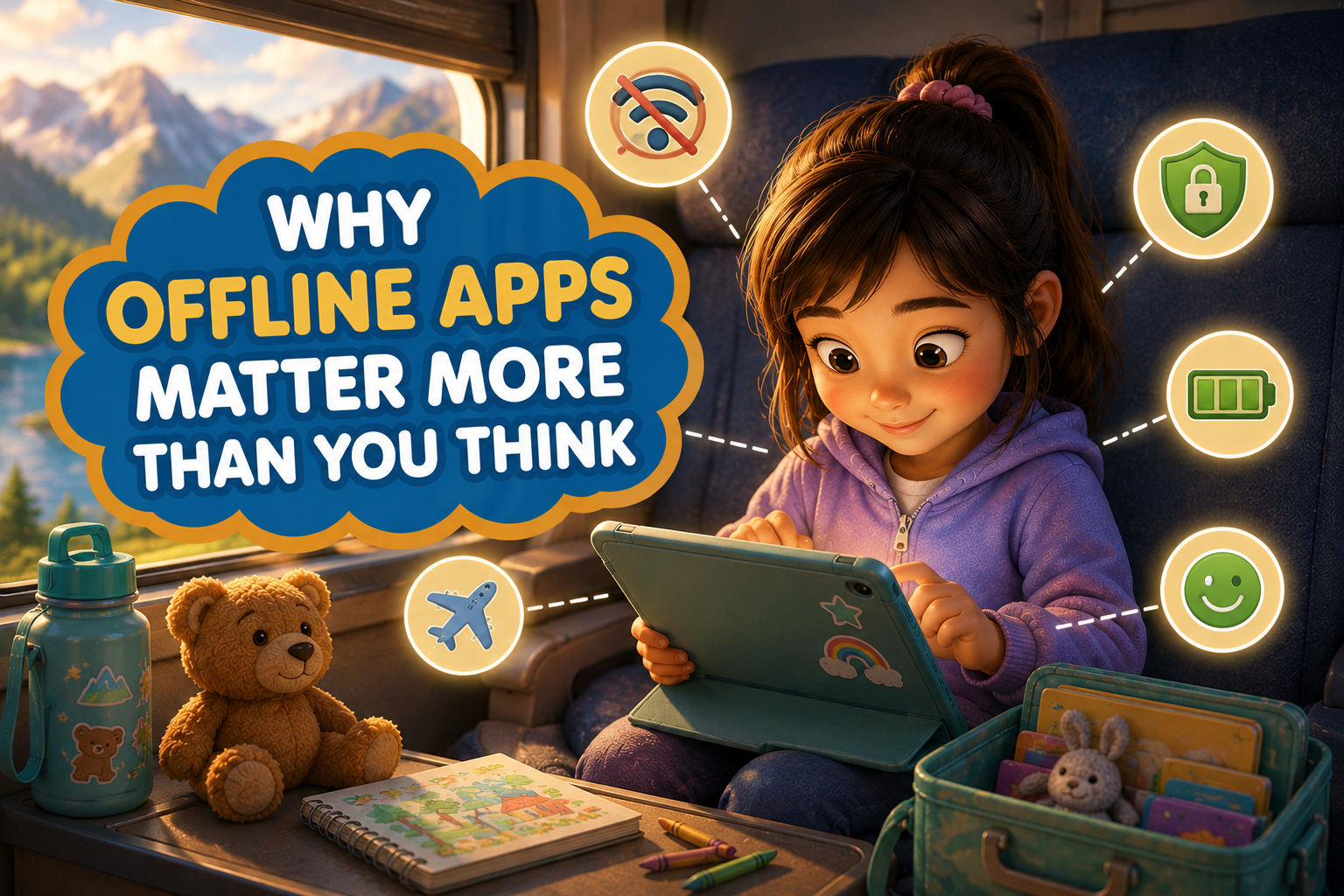
It creates stability. When an activity does not depend on connection, it becomes predictable. The child knows what will happen next, and attention remains focused instead of being disrupted. This is where structured apps become especially useful.
For example, a step-by-step cooking game for kids provides a clear sequence that does not require switching between tasks or waiting for new content to load. In Food Festival 3, children follow a process from beginning to end, preparing dishes step by step without pressure or overstimulation.
This type of experience helps children stay focused longer and creates a calm, stable interaction even in a changing environment.
How to Use Apps and Activities at the Right Time
Even the best tools work only when used at the right moment. Timing plays a critical role in how children respond during travel.
Parents often search for when to give kids a tablet during travel or how to manage kids during a flight, because the same activity can work differently depending on the situation.
A simple structure can help:
Before boarding or at the beginning of the trip. This is the easiest moment to introduce a structured activity before expectations are formed.
During long passive periods. When there is no movement or change, step-by-step interaction helps maintain focus without overload.
When the child is tired. Calm, predictable activities work better than anything fast-paced at this stage.
The goal is not to fill every moment.
It is to support the child’s state at each stage of the journey. The same logic applies to evening routines, where parents look for what to give kids before bed instead of YouTube to help them transition more smoothly.
How This Connects to Calm Apps and Focus
Travel is just one situation where attention becomes visible. In reality, the same patterns appear in everyday life. When children interact with fast, unstructured content, their attention becomes reactive. They switch faster, lose focus more easily, and struggle with transitions.
This is why many parents begin exploring calm apps for kids or looking for apps that help kids focus, even if their initial problem was travel. These areas are connected. When a child engages with structured, step-by-step experiences regularly, attention becomes more stable across all situations.
FAQ
What Apps For Kids During Travel Work Without Internet?
Parents often search for apps for kids during travel that work without the internet because connection is unreliable on planes and long trips. The best option is offline apps that provide a structured experience without interruptions. These apps allow children to stay engaged without frustration caused by loading or switching content. When an app offers step-by-step interaction, it becomes easier for the child to stay focused and complete an activity, making travel smoother for both the child and the parent.
What Can Replace YouTube During Travel For Kids?
YouTube alternatives for kids during travel should provide structure instead of endless content. Instead of passive watching, it is more effective to use activities where children follow a process. Step-by-step games, calm simulations, or creative tools allow children to stay engaged without constant stimulation. This helps reduce overstimulation and makes it easier for children to remain calm and focused throughout the trip.
Are Cooking Games Good For Kids During Travel?
Cooking games for kids can be a very effective option during travel, especially when they are designed as educational cooking games with real structure. These games allow children to follow a clear sequence, from preparing ingredients to completing a dish. This type of interaction supports focus, builds understanding, and provides a sense of completion. As a result, cooking games can keep children engaged longer than passive content.
What Type Of Game Keeps Kids Busy The Longest On A Plane?
Games that keep kids busy the longest are usually those that combine structure with interaction. Apps that guide children through a step-by-step process are more effective than fast-paced or random activities. When a game provides a clear sequence and goal, children stay engaged because they are following something, not reacting to constant changes. This creates longer and more stable attention during flights.
Do Offline Games Work Better For Kids During Travel?
Offline games often work better during travel because they remove dependency on internet connection and provide a more stable experience. Travel already creates an unpredictable environment, so having a consistent and reliable activity helps reduce stress. Offline games that are structured and easy to follow support focus and allow children to stay engaged without interruptions, making them a strong choice for long trips.
